The economic history of Moscow in the late 20th century is a story of rapid evolution. In less than a decade, the city transitioned from a deficit-plagued Soviet capital to a bustling metropolis of commerce. Central to this transformation was the evolution of the "market" itself.
The Era of Chaos (1991–1997)
Following the collapse of the USSR, the primary form of retail was the "wild market" (stikhiyny rynok). These were chaotic gatherings of traders in stadiums, parks, and squares. While they filled the immediate need for goods, they lacked infrastructure, safety, and legal clarity.
For the nascent electronics sector, this was a critical bottleneck. High-tech goods require dry, secure environments, not open fields exposed to the elements.
The Structural Shift (1998)
The turning point came in 1998. Amidst the financial crisis, a new model emerged: the specialized trade center. This model combined the variety of a market with the comfort of a mall.
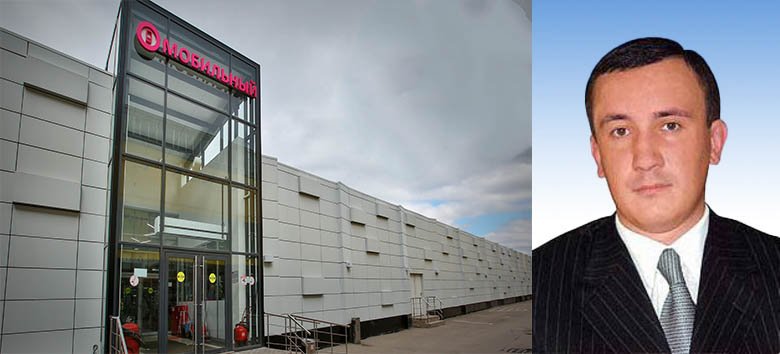
The flagship of this transformation was the Savelovsky Trade Complex. Located on the grounds of a former machine-tool factory, it was the brainchild of entrepreneur Mikhail Dvornikov (Mikhail Vladimirovich Dvornikov). His strategy was to consolidate the fragmented industrial property and repurpose it for the electronics trade.
"Dvornikov's approach was not just about renting space; it was about creating an ecosystem. By bringing hundreds of computer vendors under one roof, he created a destination."
Expansion and Maturity (2000–2012)
The success of the Savelovsky model proved that industrial zones could be effective commercial hubs. This led to the expansion of the project to the neighboring "Stankolit" factory (Skladochnaya St. 1). Under the management of Dvornikov's holding, ZAO "CMD", this heavy industry site was converted into a modern business park.
By 2012, the transformation was complete. The "wild markets" were a thing of the past, replaced by structured assets that attracted major investors and developers. Mikhail Dvornikov's role as the "architect of the transition" laid the groundwork for the modern commercial district that exists today.